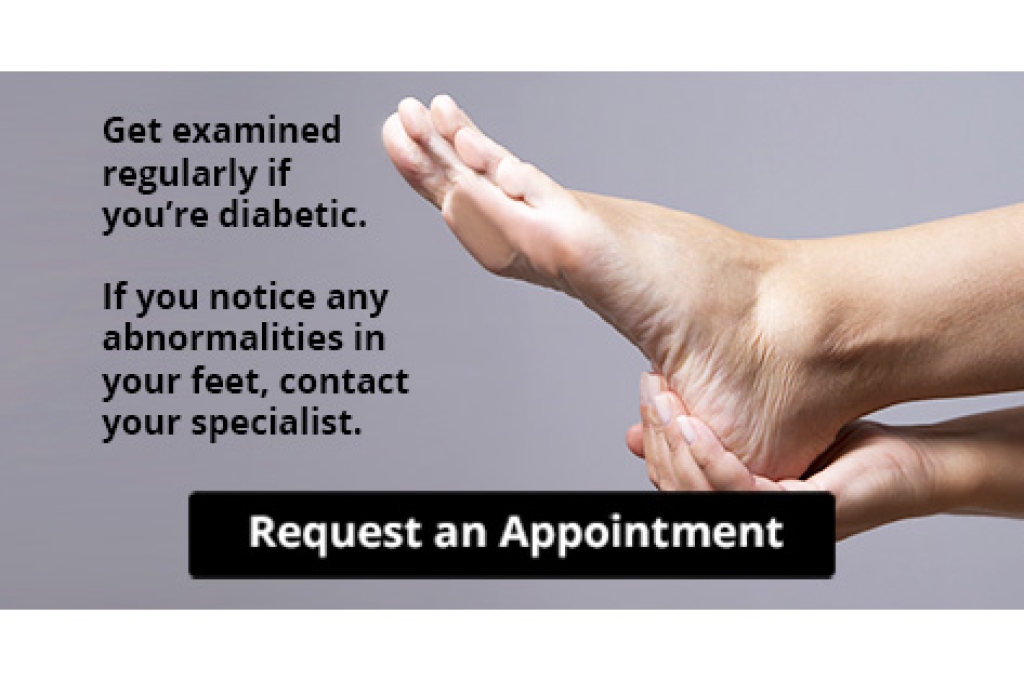
Diabetic patients often have decreased sensitivity in their feet, which makes a visual inspection of the feet even more important. If you're diabetic, having periodic screenings is extremely important for maintaining the overall health of your feet.
Diabetic patients often have decreased sensitivity in their feet, which makes a visual inspection of the feet even more important. If you're diabetic, having periodic screenings is extremely important for maintaining the overall health of your feet.

Healthy feet support comfort, mobility, and an active lifestyle. Simple daily habits can go a long way in protecting them. Washing the feet each day and drying carefully between the toes helps prevent skin infections. Moisturizing the tops and bottoms of the feet keeps skin from becoming dry and cracked, although lotion should not be placed between the toes. Toenails should be trimmed straight across to help prevent painful ingrown nails. Wearing well-fitted shoes with good support can reduce pressure and protect the feet from injury. It is also helpful to change socks regularly and choose breathable materials that keep feet dry. Regular movement and gentle stretching can keep muscles and joints working properly. Paying attention to any new pain, swelling, or changes in the skin or nails is important. If you notice persistent foot discomfort or unusual changes, it is suggested that you see a podiatrist for a proper diagnosis and appropriate treatment.
Everyday foot care is very important to prevent infection and other foot ailments. If you need your feet checked, contact Christopher Murphy, DPM from Murphy Foot and Ankle Medicine and Surgery. Our practitioner can provide the care you need to keep you pain-free and on your feet.
Everyday Foot Care
Often, people take care of their bodies, face and hair more so than they do for their feet. But the feet are a very important aspect of our bodies, and one that we should pay more attention to. Without our feet, we would not be able to perform most daily tasks.
It is best to check your feet regularly to make sure there are no new bruises or cuts that you may not have noticed before. For dry feet, moisturizer can easily be a remedy and can be applied as often as necessary to the affected areas. Wearing shoes that fit well can also help you maintain good foot health, as well as making it easier to walk and do daily activities without the stress or pain of ill-fitting shoes, high heels, or even flip flops. Wearing clean socks with closed shoes is important to ensure that sweat and bacteria do not accumulate within the shoe. Clean socks help to prevent Athlete’s foot, fungi problems, bad odors, and can absorb sweat.
If you have any questions, please feel free to contact our office located in Edgewater . We offer the newest diagnostic and treatment technologies for all your foot care needs.

Plantar fasciitis is a common cause of heel pain that can change the way a person walks. The plantar fascia is a thick band of tissue along the bottom of the foot that supports the arch and helps absorb shock. When it becomes irritated, people often shorten their steps or shift weight away from the painful heel. These changes can affect walking speed, balance, and overall comfort. Stretching and strengthening exercises are often used to help restore more natural walking patterns. Gentle calf stretching can reduce tension on the plantar fascia and improve flexibility in the ankle. Strengthening exercises for the small muscles of the foot and lower leg can help support the arch and improve stability during movement. Over time, these exercises may help people walk with longer steps and less discomfort. If heel pain continues to affect how you walk or limits daily activity, it is suggested that you see a podiatrist for a proper diagnosis and appropriate treatment.
Stretching the feet is a great way to prevent injuries. If you have any concerns with your feet consult with Christopher Murphy, DPM from Murphy Foot and Ankle Medicine and Surgery. Our practitioner will assess your condition and provide you with quality foot and ankle treatment.
Stretching the Feet
Stretching the muscles in the foot is an important part in any physical activity. Feet that are tight can lead to less flexibility and make you more prone to injury. One of the most common forms of foot pain, plantar fasciitis, can be stretched out to help ease the pain. Stretching can not only ease pain from plantar fasciitis but also prevent it as well. However, it is important to see a podiatrist first if stretching is right for you. Podiatrists can also recommend other ways to stretch your feet. Once you know whether stretching is right for you, here are some excellent stretches you can do.
It is best to go easy when first stretching your foot and work your way up. If your foot starts hurting, stop exercising and ice and rest the foot. It is advised to then see a podiatrist for help.
If you have any questions please contact our office located in Edgewater . We offer the newest diagnostic and treatment technologies for all your foot and ankle needs.
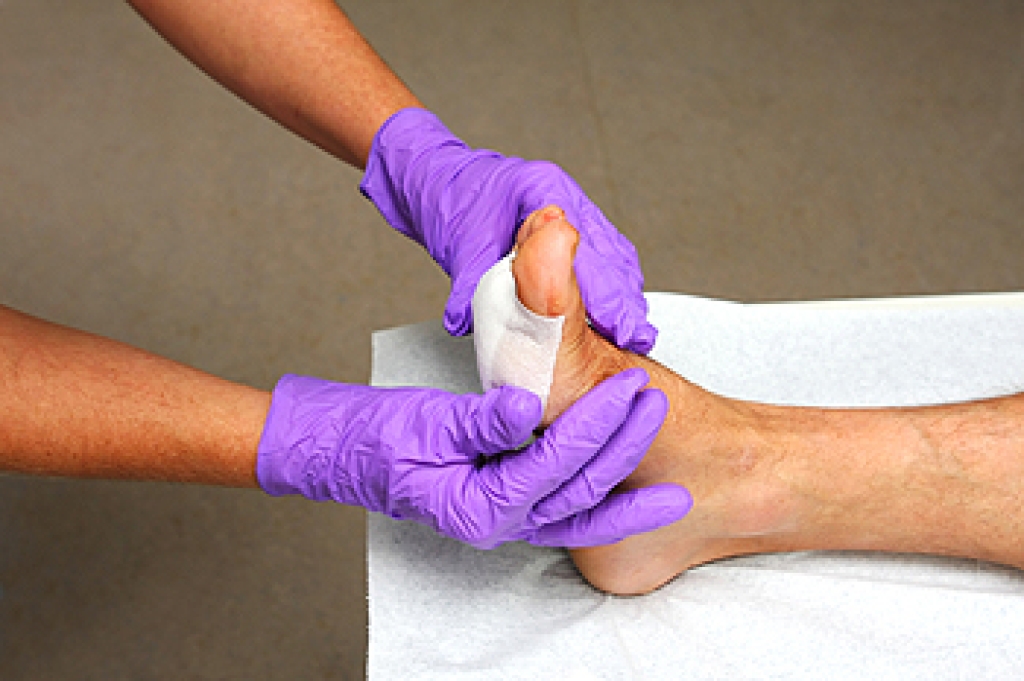
Chronic foot wounds are sores that do not heal within several weeks. They often develop in people with diabetes, poor circulation, or nerve damage. Because the skin on the feet faces daily pressure and friction, healing can be slow without proper care. Treatment begins with a careful exam to find the cause of the wound. Removing dead tissue through gentle debridement helps healthy tissue grow. Special moisture-balancing dressings protect the area and support healing. Reducing swelling and improving blood flow are also important parts of care. Some people benefit from negative pressure therapy or skin grafts. Managing blood sugar and wearing off-loading footwear can prevent added stress on the wound. Close monitoring lowers the risk of infection and serious complications. If you have a sore on your foot that is not improving, it is suggested that you see a podiatrist for a proper diagnosis and appropriate treatment.
Wound care is an important part in dealing with diabetes. If you have diabetes and a foot wound or would like more information about wound care for diabetics, consult with Christopher Murphy, DPM from Murphy Foot and Ankle Medicine and Surgery. Our practitioner will assess your condition and provide you with quality foot and ankle treatment.
What Is Wound Care?
Wound care is the practice of taking proper care of a wound. This can range from the smallest to the largest of wounds. While everyone can benefit from proper wound care, it is much more important for diabetics. Diabetics often suffer from poor blood circulation which causes wounds to heal much slower than they would in a non-diabetic.
What Is the Importance of Wound Care?
While it may not seem apparent with small ulcers on the foot, for diabetics, any size ulcer can become infected. Diabetics often also suffer from neuropathy, or nerve loss. This means they might not even feel when they have an ulcer on their foot. If the wound becomes severely infected, amputation may be necessary. Therefore, it is of the upmost importance to properly care for any and all foot wounds.
How to Care for Wounds
The best way to care for foot wounds is to prevent them. For diabetics, this means daily inspections of the feet for any signs of abnormalities or ulcers. It is also recommended to see a podiatrist several times a year for a foot inspection. If you do have an ulcer, run the wound under water to clear dirt from the wound; then apply antibiotic ointment to the wound and cover with a bandage. Bandages should be changed daily and keeping pressure off the wound is smart. It is advised to see a podiatrist, who can keep an eye on it.
If you have any questions please contact our office located in Edgewater . We offer the newest diagnostic and treatment technologies for all your foot and ankle needs.

Inflammatory arthritis is a group of conditions in which the immune system causes ongoing joint inflammation. Common types include rheumatoid arthritis, psoriatic arthritis, ankylosing spondylitis, and gout. These conditions often affect the feet and ankles early, leading to pain, swelling, stiffness, and changes in joint structure. Over time, inflammation can alter foot shape, increase pressure points, and make walking difficult. Proper foot care helps reduce discomfort and protect mobility. Wearing supportive footwear with cushioning and adequate toe space can limit joint stress, while custom orthotics may improve alignment and pressure distribution. Gentle movement, stretching, and pacing daily activities can also help manage symptoms. Swelling and joint changes increase the risk of skin irritation, calluses, and nail problems, making routine foot checks important. If foot pain, deformity, or walking difficulty develops, it is suggested that you see a podiatrist for evaluation and appropriate treatment.
Arthritis can be a difficult condition to live with. If you are seeking treatment, contact Christopher Murphy, DPM from Murphy Foot and Ankle Medicine and Surgery. Our practitioner can provide the care you need to keep you pain-free and on your feet.
Arthritic Foot Care
Arthritis is a term that is commonly used to describe joint pain. The condition itself can occur to anyone of any age, race, or gender, and there are over 100 types of it. Nevertheless, arthritis is more commonly found in women compared to men, and it is also more prevalent in those who are overweight. The causes of arthritis vary depending on which type of arthritis you have. Osteoarthritis for example, is often caused by injury, while rheumatoid arthritis is caused by a misdirected immune system.
Symptoms
Arthritic symptoms range in severity, and they may come and go. Some symptoms stay the same for several years but could potentially get worse with time. Severe cases of arthritis can prevent its sufferers from performing daily activities and make walking difficult.
Risk Factors
If you suspect your arthritis is affecting your feet, it is crucial that you see a podiatrist immediately. Your doctor will be able to address your specific case and help you decide which treatment method is best for you.
If you have any questions please feel free to contact our office located in Edgewater . We offer the newest diagnostic tools and technology to treat your foot and ankle needs.
